Crush + Lovely for the American Heart Association
2020
❤️ From measurement to meaning: Reframing a Heart Health App into a Habit Building Journey
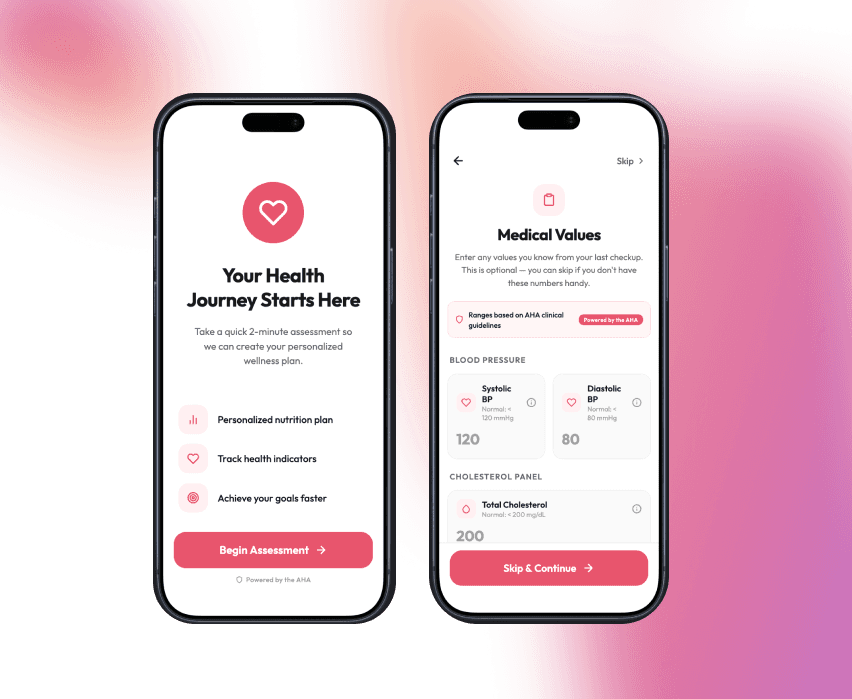
Users completed some or the whole assessment then disengaged. After research, one insight became clear:
Users didn’t understand the value of the app, and without short-term wins, motivation disappeared. The app gave them a number, but it didn’t tell them what that number meant for their life.
Role
Lead Product Designer
Sole Designer
Team
2x Product Owners
1x Product Manager
2x Engineers
Impact
Rise in completed asssessments
Rise in created accounts
Roadmap for improvements and scalability
I led the experience from problem framing through interaction design and prototyping, working across research, product thinking, and visual/interaction design.
My work included:
Framing the behavioral problem and design opportunity
Synthesizing research and user feedback
Mapping the relationship between data, meaning, and action
Developing interaction and information architecture
Exploring multiple concepts and design directions
Creating high-fidelity prototypes
Evaluating concepts and iterating based on feedback
Designing reusable interaction patterns
Collaborating with cross-functional partners throughout the process
Problem area
Users Didn’t Understand the Value, So They Didn’t Stay
Despite completing the initial heart assessment, users quickly disengaged from the program. Research revealed the core issue wasn’t an usability issue, it was clarity. Users didn’t fully understand what their score meant, how it impacted their long-term health, or why the weekly journey mattered. Without visible progress or short-term reinforcement, motivation faded.
Key Issues Identified
The goal felt abstract
Progress felt invisible
The score lacked emotional meaning
Design principle
Make the data mean something.
Instead of presenting information as a collection of measurements, I explored ways to create a hierarchy of meaning:
What happened
What does the data show?
Why it matters
What does this mean in context?
What can I do?
What action can I take?
Am I making progress?
How is my behavior changing over time?
Design Strategy
Shifting the product from a clinical measurement tool to a guided transformation experience.
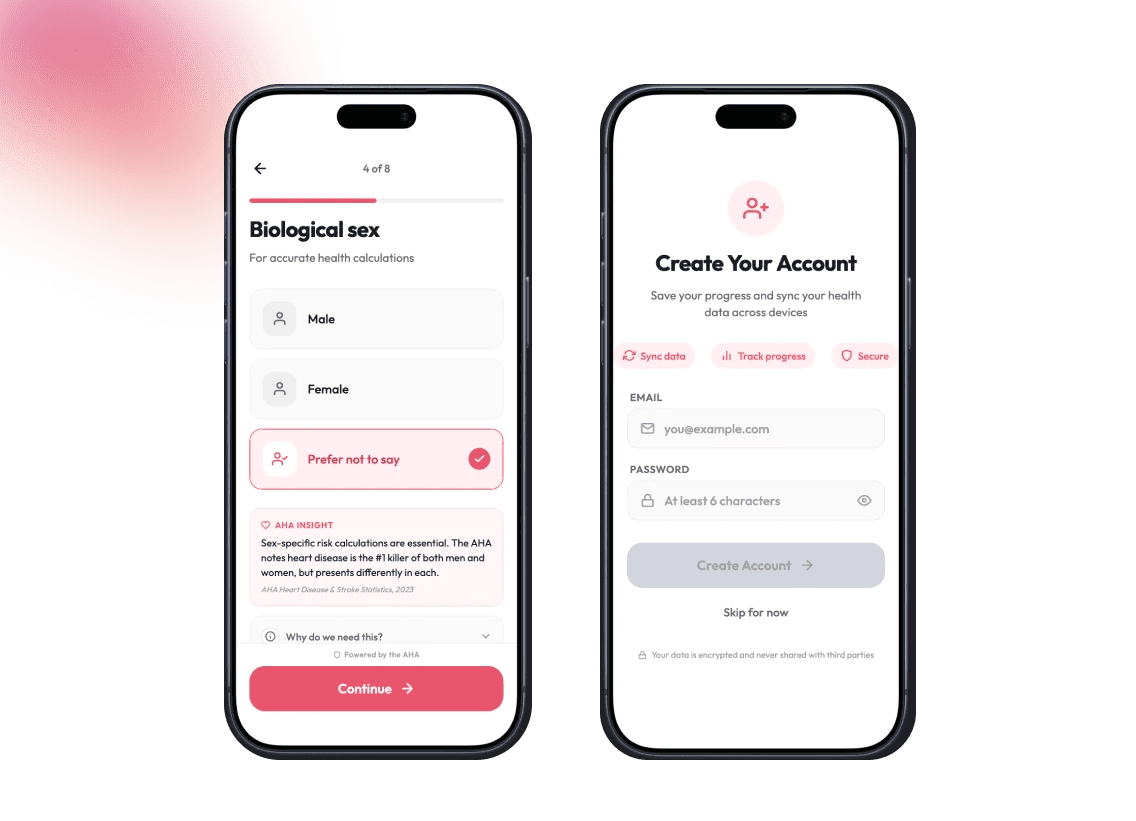
The real goal isn’t knowing your heart score, it’s improving your life. We needed to connect this to the larger onboarding, communicate the value of the process and then, pitch the creation of an account.
We anchored the redesign around three principles:
Clarity of Purpose
Help users understand WHAT they’re doing and WHY it matters.
Visible progress.
Make improvement tangible weekly, not just at the end of the of the program.
Habit momentum.
Turn education into action through progressive behavior change.
Design decision 01
Onboarding: Define the Journey
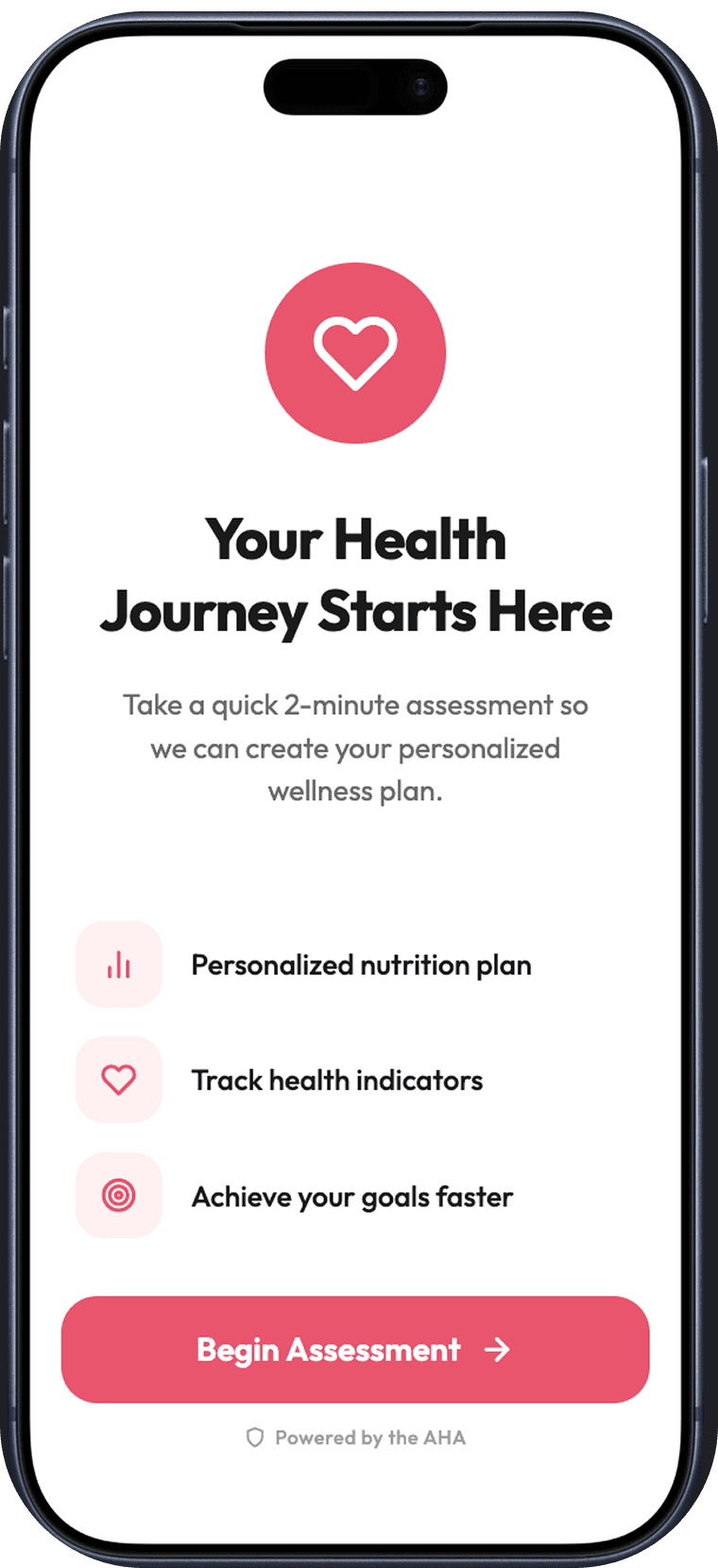
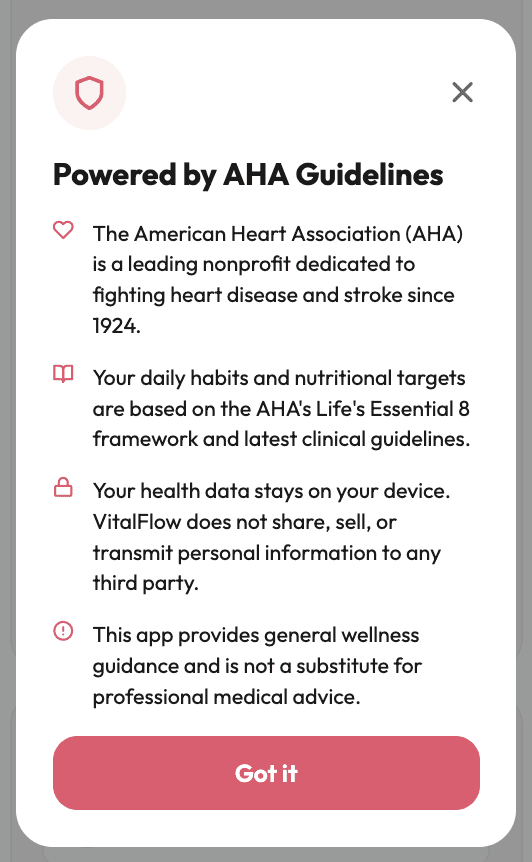
We redesigned onboarding to explicitly answer: What am I doing here? Why does this matter? What will happen over time?
We also focused on the science behind the recommendations and the assessment, solidifying the connection between the process, the science and the value for our user.
Design decision 02
Snapshot → Action
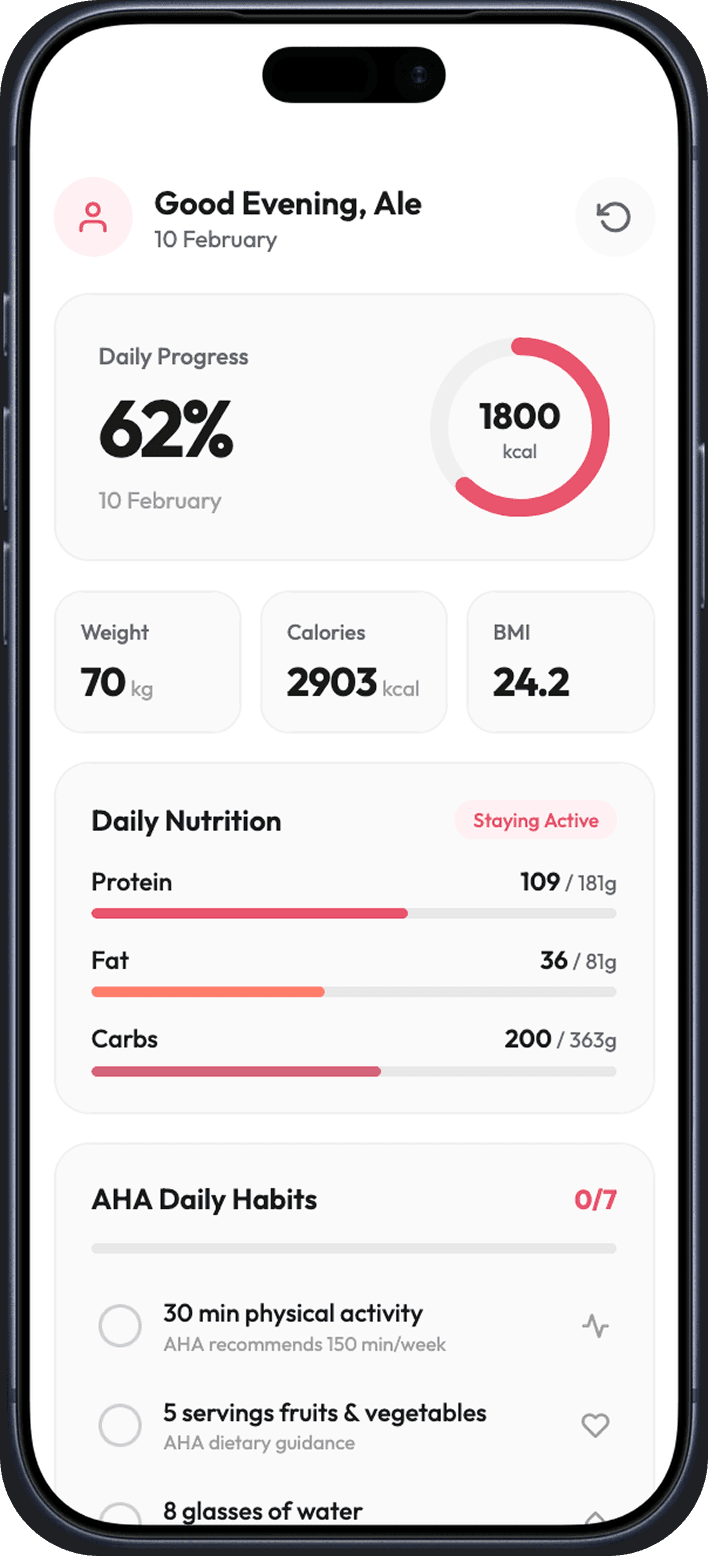
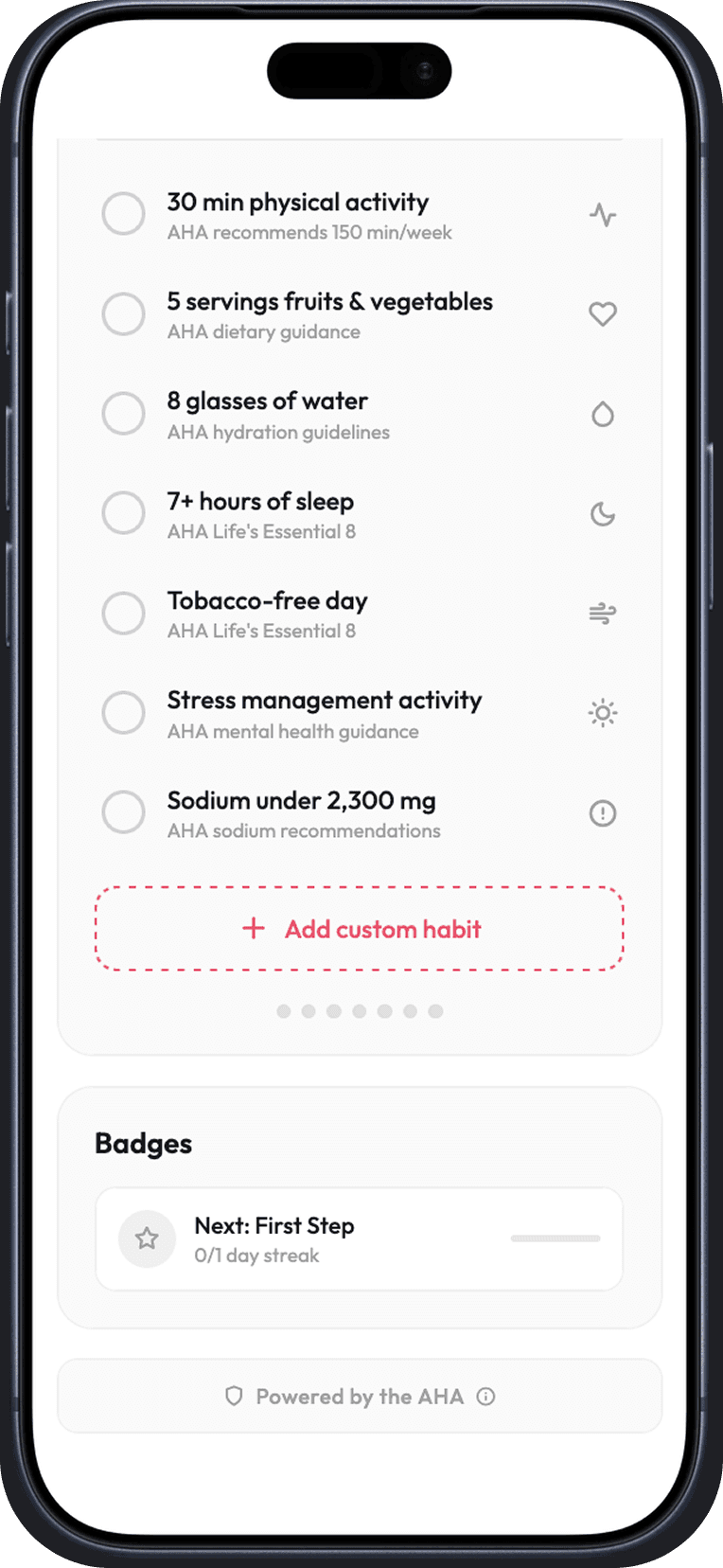
We reframed the heart score as a dynamic snapshot, not a static result. Users now see a starting point, not the end result.
A score that's directly influence by habits, and how small changes accumulate over time.
Design decision 03
Visual Redesign: Reduce Cognitive Load
The original app relied heavily on color and visual noise. The new look had an emotional shift from clinical and overwhelming → to calm, focused, and encouraging.
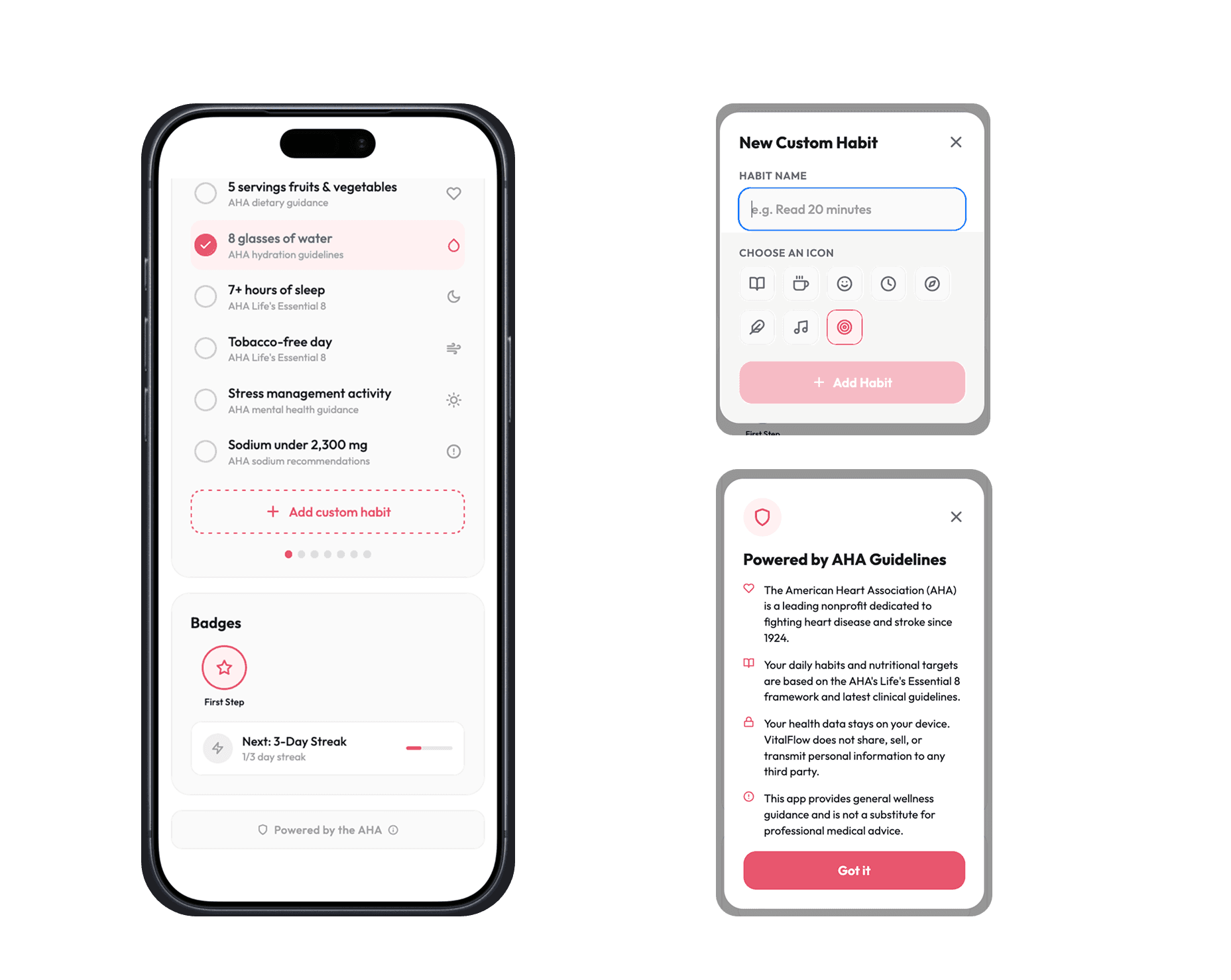
Key Visual updates:
1. Reduced color overload
2. Clear hierarchy
3. Focused layouts & Breathing space
4. Consistent component patterns
5. Components aid the user to persoonalized and understand.
Highights
By reframing the experience around clarity, habit formation, and visible progress we shifted from “I’m not sure what this does.” to “I can see how I’m getting better.”
Despite its valuable features, the app struggled with engagement. Users found the purpose unclear, and the long-term tracking system lacked shorter-term rewards to sustain motivation. The challenge was to create a user experience that clearly communicates value and keeps users engaged over time.
Engagement across the program journey increased
Weekly participation improved
Drop-off in early weeks decreased
Users reported feeling more confident and motivated
Retrospective
Connecting health data to human meaning
IDesigning the health onboarding journey reinforced that data alone does not create trust, interpretation does. While we surfaced relevant health information clearly, users only engaged when that data was translated into personal impact: what it meant for their care, their costs, and their outcomes. We learned that clinical metrics and quality indicators must be framed in human terms, supported by plain language and contextual guidance. By connecting abstract health data to real-world decisions, I shifted onboarding from information intake to meaningful understanding, increasing confidence and engagement from the very first interaction.